

Building a website? Then you need to talk about your SSL (Secure Sockets Layer) certificate. It might seem like a small technical detail, but it is an incredibly important feature that determines whether your website actually works or gets blocked by every major browser on the planet. Without it, your digital presence is essentially dead on arrival.
But fear not! In this blog post, we will explain everything you need to know about SSL certificates and show you why automation has gone from a luxury to a requirement for survival.
Table of Contents
- What an SSL Certificate Actually Is
- Consequences of Not Having SSL
- New Industry Standards: Shorter SSL Lifespans
- The Difficulty of Manual SSL Management
- How TruVISIBILITY Solves SSL Security
- Conclusion
What an SSL Certificate Actually Is
Let’s strip away the jargon. Think of an SSL certificate as a digital passport for your website. It handles two critical jobs:
- It creates an encrypted tunnel. This ensures that any information your customers send - like a credit card number or a simple email address - is scrambled into a code that hackers cannot read.
- It proves your identity. The certificate is a form of identity verification issued by a trusted authority. It tells the world your site is legitimate.
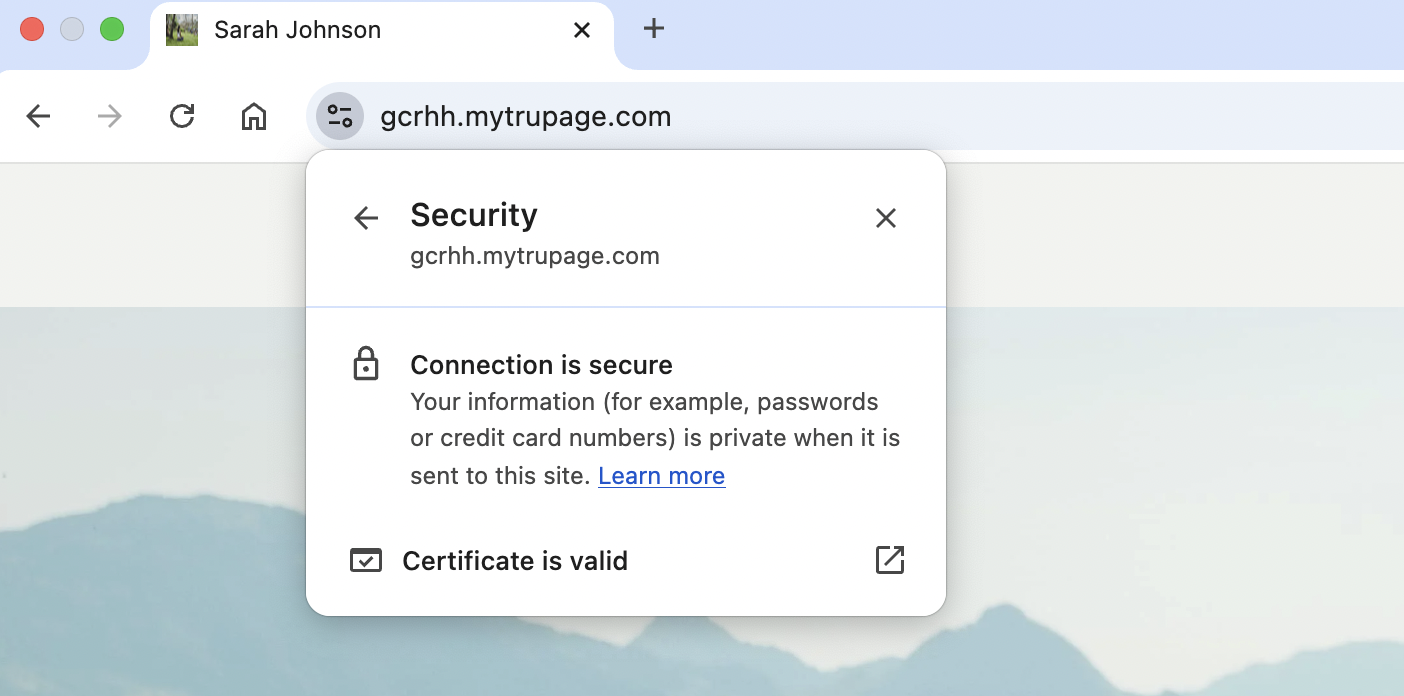
When a certificate is active, your website's address changes from http:// to https:// (the "s" stands for Secure). Most importantly, it triggers the small padlock icon in the browser's address bar. This icon is the universal signal to your visitors that their connection is safe and your business is professional. Without that padlock, you're missing the most basic badge of online trust.
Consequences of Not Having SSL
Don't fall for the myth that an SSL certificate is just a "nice-to-have" marketing feature. In 2025, the reality is brutal. If your website doesn't have a valid, active SSL certificate, browsers like Google Chrome, Safari, and Edge will effectively block users from seeing your content.
When a visitor types in your address, the browser immediately hunts for a secure connection. If it isn't there, they see a full-page, bright red warning that says "Your connection is not private." For a potential customer, this is the digital equivalent of seeing a "Condemned" sign on a storefront. Most people will hit the "Back to safety" button before you even get a chance to say hello.
New Industry Standards: Shorter SSL Lifespans
Traditionally, the industry standard was simple: you renewed your SSL certificate once every 13 months, checked it off your list, and didn't think about it for another year. But that era is ending. Industry leaders like Apple and Google are pushing for radically shorter certificate lifespans to increase global security.
Starting in March 2026, the maximum lifespan of a certificate will drop to just 200 days. By 2029, that number is expected to shrink to a mere 47 days.
What does that mean for you? It means that if you are managing your security manually, you will have to go through the renewal nightmare nearly eight times a year. The old way of "set it and forget it" for 13 months is dead. Without a professional automation system, your website is guaranteed to go dark eventually.
The Difficulty of Manual SSL Management
You might read guides that claim installing an SSL certificate is "simple." For an IT professional, it might be. But for most business owners and creatives, the process feels like learning a foreign language. Terms like "Private Keys," "CABUNDLEs," and ".htaccess redirects" aren't just technical jargon - they are obstacles that can break your site if handled incorrectly.
The real trap of manual management is that it turns you into a part-time system administrator. With traditional platforms, you are responsible for piecing together hosting and security. One tiny typo in a configuration file or one missed renewal deadline, and your site is hit with a "Not Secure" warning. Even "simple" plugin solutions just add another layer of software you have to monitor and update.
As lifespans shrink toward that 47-day mark, this manual cycle stops being a "task" and starts being a full-time liability.
How TruVISIBILITY Solves SSL Security
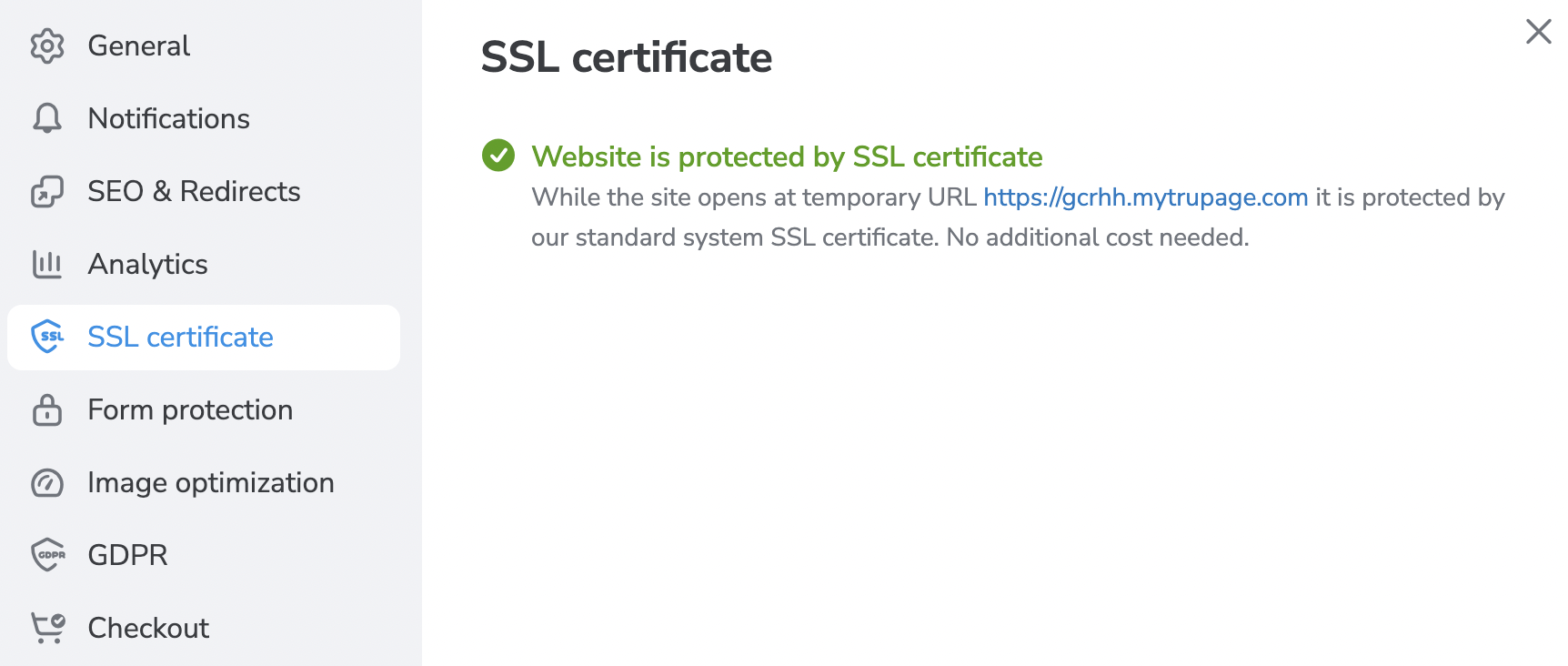
The entire point of the TruVISIBILITY Suite is to take these technical hurdles off your plate. We believe that technology should be easy to use, so we've simplified security to the point where it's completely worry-free. We provide high-grade SSL certificates and manage the entire renewal process on your behalf. Since our system keeps your encryption up to date automatically, there is no need to deal with outside providers - everything is handled right here.
If you are using the TruVISIBILITY Sites app, the SSL process is invisible. Every website is automatically issued a high-grade SSL certificate as soon as it goes live. Since we take care of the updates, you never have to lift a finger.
For those of you who prefer WordPress, our managed hosting gives you that same future-proof peace of mind. Your hosting includes an integrated SSL certificate ready from day one. We look after all the renewals, ensuring your site stays safe and compliant without you ever having to look at a server setting.
Whether you are on our Freemium or Pro plan, your first website - including managed hosting and its SSL certificate - is included. If you need to grow and launch more projects, adding extra sites is just as easy. For Freemium users, an additional website is $5 per month and the extra SSL certificate is $5 per month. If you are on our Pro plan, it’s even more affordable at just $3 per month for the additional website and $3 per month for the SSL.
Conclusion
Now you know that an SSL certificate isn't just a technical detail—it’s the badge of trust that keeps your website alive. We’ve looked at how the "padlock" protects your visitors and why the industry is moving toward a 47-day renewal cycle that makes manual management almost impossible. Security is becoming more frequent and more complex, but it doesn't have to be your problem.
The TruVISIBILITY way is about keeping things easy. We handle the certificates, the renewals, and the technical settings so you can stay focused on what you do best: growing your business.
Don’t let a "Not Secure" warning kill your momentum. Register for a freemium TruVISIBILITY account today and start building your website with security that just works!
Related articles


Want to receive more articles?
Sign-up for our weekly newsletter to receive info that will help your business grow